
Closing Up Your Garden: How to Prepare Your Raised Beds for Winter
Introduction
The arrival of winter doesn’t mean that the market gardener can simply “let the bare soil lie fallow.” Quite the contrary. The months from October to December are crucial for tidying up after a busy season, protecting soil structure, and preparing for early-season crops.
On a bio-intensive vegetable microfarm, covering the beds is a crucial step: choosing the right type of protection, preparing (or not) the beds, covering them properly, and making sure the wind doesn’t blow everything away… All these technical decisions will make a difference come March.
How should one organize oneself during this period, and which methods should be prioritized depending on the circumstances and objectives?
1. Three Ways to Protect Your Lawn in Winter
Winter may seem long, but it offers a valuable opportunity to protect and replenish the soil. There are three main options:
Leave crops in the ground
Some crops survive the winter without any problems and will be harvested in the spring: fava beans, onions, and sometimes garlic or spinach, depending on the farming system. They thus serve a dual purpose: producing a crop and keeping the soil covered.
Planting green manure
If planted in September, October, or even as late as December for cereals, green manure crops provide an active plant cover. They protect the soil, reduce erosion, and improve soil structure, particularly for fields intended for late-season crops (April–May).
Covering with a tarp
This is the method we prefer: a long-term cover crop, from November through March. It’s ideal when the next crops are scheduled for January, February, or March, since the growing season is too short to produce a useful green manure.
Mulching also helps break down organic matter left on the ground, reduces weed pressure, and helps maintain a protected and well-structured soil.
2. Whether or not to prepare the boards before covering them
Depending on the type of soil and the amount of energy available at the end of the season, there are two options:
Prepare the beds in the fall
This is especially useful in clayey, heavy, and damp soils in the spring. This may include: reshaping the beds (hilling), spreading compost, and lightly cleaning the surfaces before covering them with plastic. This strategy ensures you’re ready as soon as the first spring weather windows open, which are often short-lived or late to arrive in heavy soils.
Prepare the beds in the spring
We’ve chosen this method today because our sandy loam soil dries out fairly quickly, we have more energy in the spring, and the arrival of seasonal workers in March makes the work easier. However, we prepare the beds for January crops in the fall, as the timeframe would be too short otherwise.
Remember to leave your crop residues in the field! Celery stalks, carrot tops, vegetable scraps—leave it all there. Covered with a tarp, it will decompose nicely over the winter, helping to improve soil fertility.
3. Winter covering: a thorough method to avoid unpleasant surprises
Covering your plants for the entire winter is completely different from covering them for just two weeks in the middle of the season. Here are a few steps to follow:
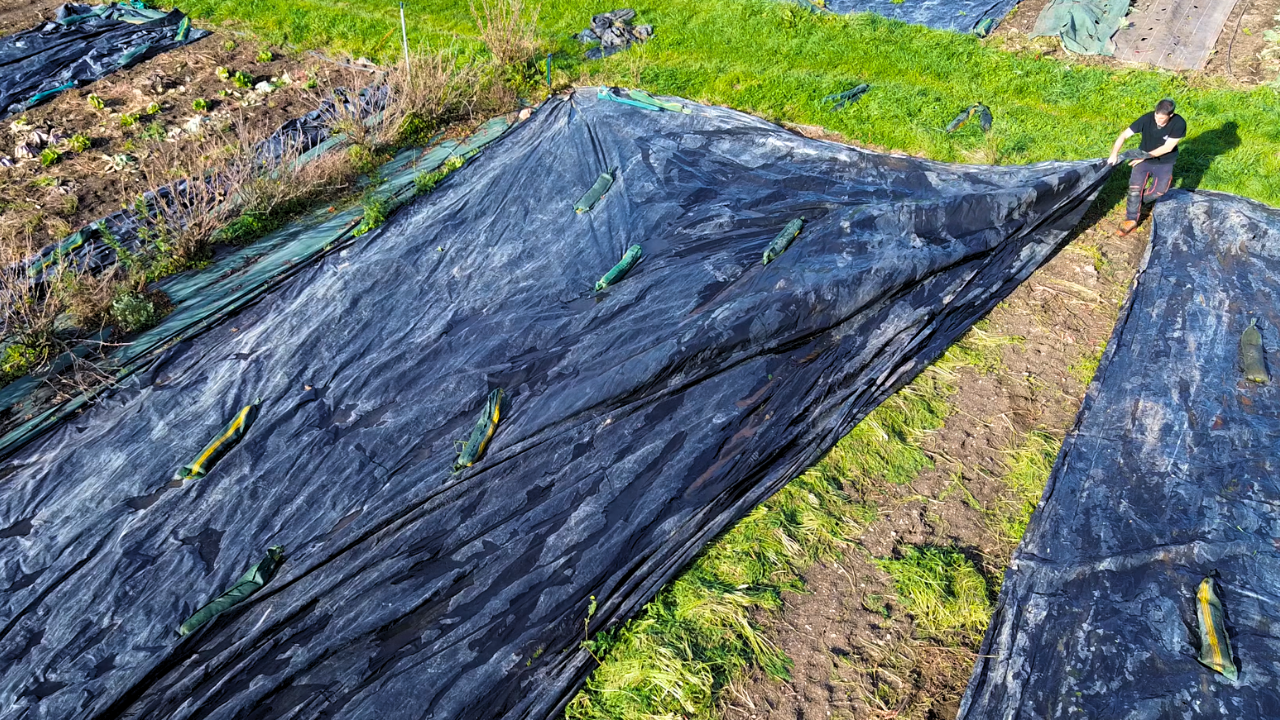
1. Standardize your equipment
Each 12-bed garden is equipped with two dedicated tarps, which are kept on site at all times.
The tarps cover 6 boards on one side and 6 on the other.
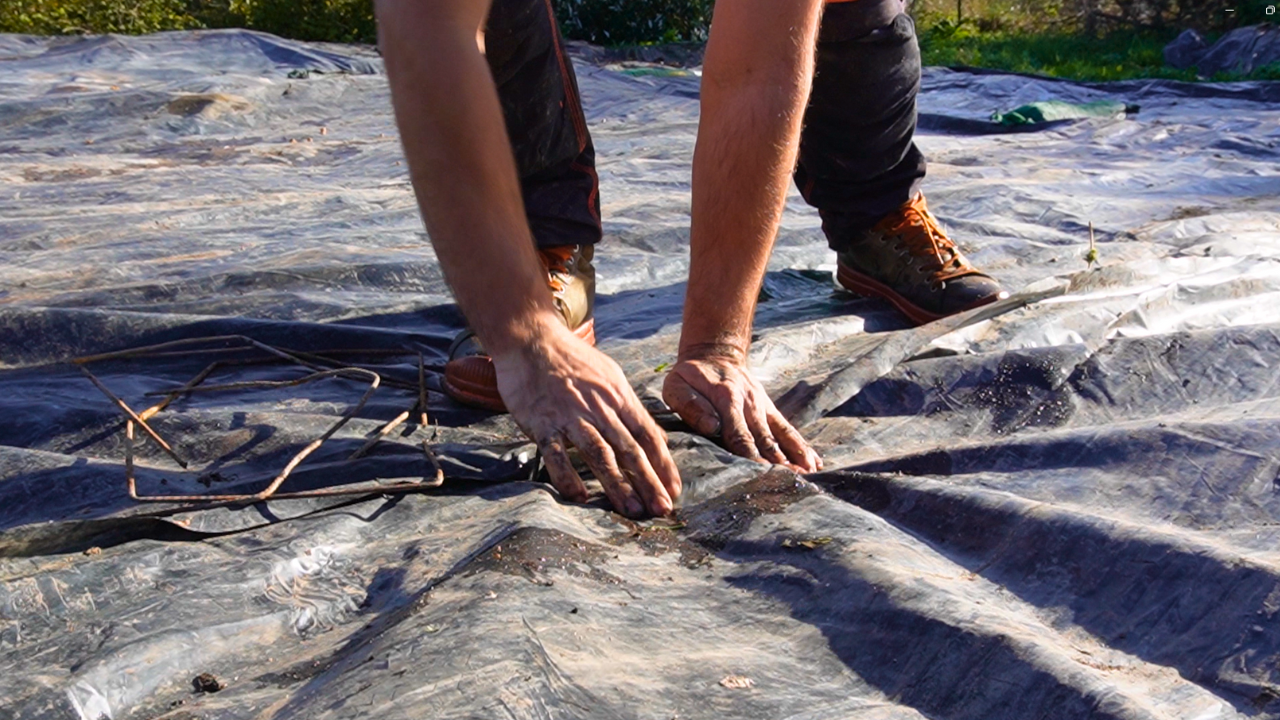
2. Staple properly
A must-have for braving the winter wind:
staples every 1 to 1.5 meters
plastic lined at each attachment point
Staple all around before placing the silo bags
Be mindful of exposure: reinforce the area facing the prevailing winds
Install a sufficient number of bag silos
You’ll need about 35 Silosacs per garden (for 12 raised beds). The quantity may seem surprising, but it ensures the covers will last for 4 to 5 months.

3. Dealing with Puddles
If the ground is flat or the tarps are new, puddles may form and compact the soil. The solution? Drill small holes as needed to allow water to drain away (or rely on rodents, who sometimes take care of this naturally…).
4. Avoid large piles of debris
If they are too bulky, the tarp won’t stretch properly and will sag. Small pieces of debris, on the other hand, aren’t a problem.
Conclusion
Preparing your garden for winter is a crucial step for the coming season. Whether you choose to leave crops in the ground, plant cover crops, or use long-term mulch, every gardener must make a decision based on their soil type, their goals, and how much energy they have left at the end of the year.
When done properly, mulching remains an extremely effective tool for small areas: it protects, provides structure, prepares the soil, and greatly simplifies spring maintenance.
By taking care of this step between November and December, you’ll ensure a smoother spring… and soil that’s ready to welcome new crops under the best conditions.