
How to use the Ladbrooks Micromotte 20 to grow successful nightshades?
Abstract
Although long overlooked, the micro-tiller has proven to be an incredibly effective tool for professional vegetable growers, particularly for the early production of tomatoes, peppers, and eggplants. With it, growers can plant hundreds of seedlings while optimizing space and energy. In this article, let’s explore why the micro-transplanter has become an essential tool for sowing nightshade crops and how to use it effectively.
Introduction
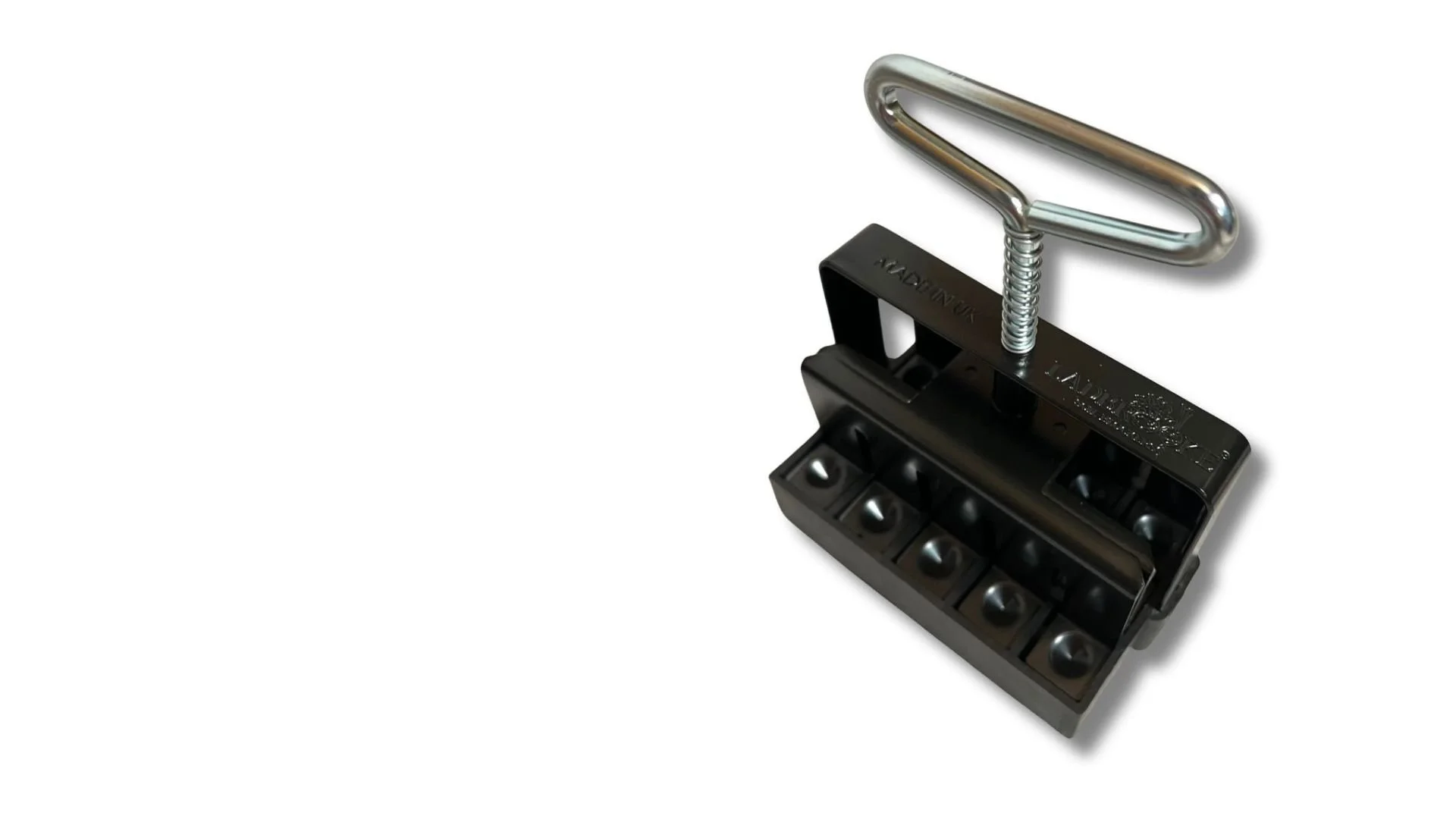
For a long time, we thought the mini-tiller was too small to be of any real use in vegetable farming.
Making 1.8 × 1.8 cm soil clumps seemed ill-suited for both fields and gardens: too dry, too tiny. Then, one day, we understood. This tool wasn’t designed to replace traditional soil clumps, but to meet a very specific need in professional vegetable farming: to successfully grow early-season nightshades on a large scale while saving space and energy. Today, we’ll explain what it’s really for and why it has changed the way tomatoes, eggplants, and peppers are grown.
1. Micromottes: a tool designed for professional vegetable growers
The micro-balling machine produces tiny root balls—so small that they seem unusable for direct planting. And that’s to be expected: they’re not meant for the field, but for repotting.
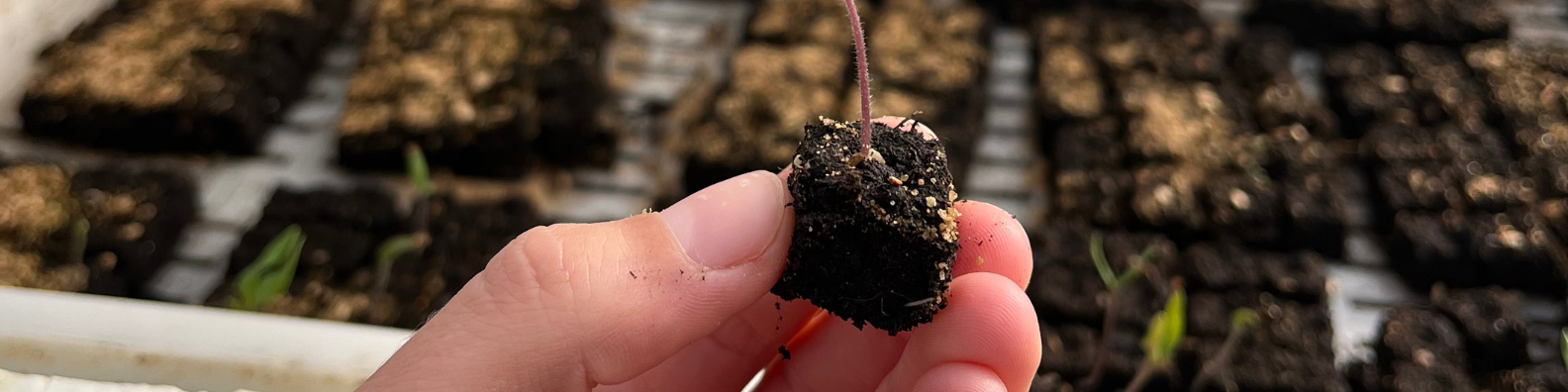
This mini-pot is specifically designed for nightshade plants (tomatoes, eggplants, peppers)—demanding crops that are started very early in the season, sometimes as early as February. This presents numerous challenges:
need heat for the seeds to germinate,
lack of space on the heating pads,
high energy consumption,
germination, which can sometimes be unpredictable.
Using a standard tray, you can produce up to 400 micro-plugs in a single batch—an unbeatable density. To plant 200 to 400 tomato plants in standard pots or large plugs, you’d need a huge amount of space… and a much higher energy bill.
The micro-tiller is therefore a smart tool: it allows for large-scale seedling management while keeping energy consumption to a minimum.
2. How do you use a skid steer loader properly?
It’s easy to use: simply fill the top of the tool with very moist potting soil (about 25 liters of water for a 70-liter bag). A few presses are all it takes to produce small, clean, well-formed clumps.
Some best practices:
→ Maintaining humidity: the main challenge
The micro-clumps dry out very quickly, especially when placed on a heating mat. Daily monitoring is essential.
Recommended watering:
soak the tray to prevent the seeds from being washed away,
or water very gently over a thin layer of sand, potting soil, or vermiculite.
→ Planning Your Seedlings
You can place the seedling pots close together or leave some space between them. Another advantage is that you can mix several varieties in the same tray (tomatoes, eggplants, peppers), each with its own label.
→ Save a significant amount of space and energy
A small heating mat that’s 1 meter wide can hold four trays. That means you can start 800 nightshade seedlings as early as February 15—even in a sunroom! An exceptional yield for such a small space.
3. From sowing to repotting: switching to Spidmot 16
Once the seeds have sprouted, it’s time to transplant them into larger pots. That’s where the Spidmot 16 comes in, equipped with specially designed square prongs.
The benefits:
32 clumps per tray,
soil that is kept consistently moist,
quick release,
and best of all: the micro-clod fits perfectly into the designated hole.
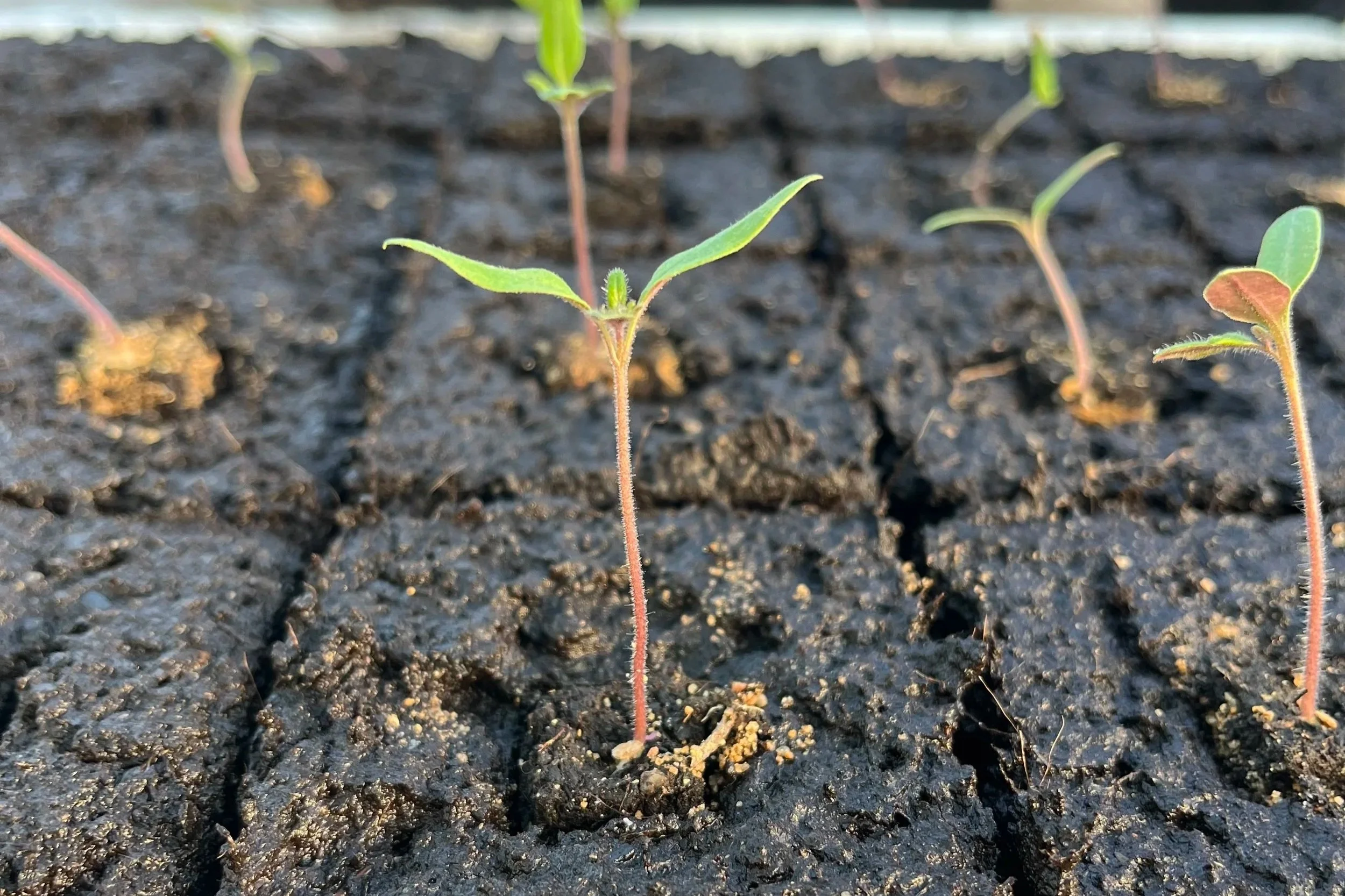
The contrast is striking: 200 small clumps on a surface, 32 clumps on the same surface. This is why it’s impossible to use large clumps throughout the entire process from the start.
Transplanting is a breeze: simply take the sprouted micro-clump, slide it into the larger clump, and the plant will continue to grow without a hitch.
Conclusion
The micro-mounding machine may not seem like the most intuitive tool at first glance, but it’s incredibly efficient once you understand how it works. For early-season solanaceous crops, it offers unmatched savings in space, energy, and time. When paired with a system for larger plugs, such as the Spidmot 16, it allows for the production of vigorous seedlings in large quantities, even on a very small area.